Happy Tunes - Earn & Play
- 4.3
- Rating
- 100.00K
- Installs
- Free
- Price

 Analysis by App-foxy
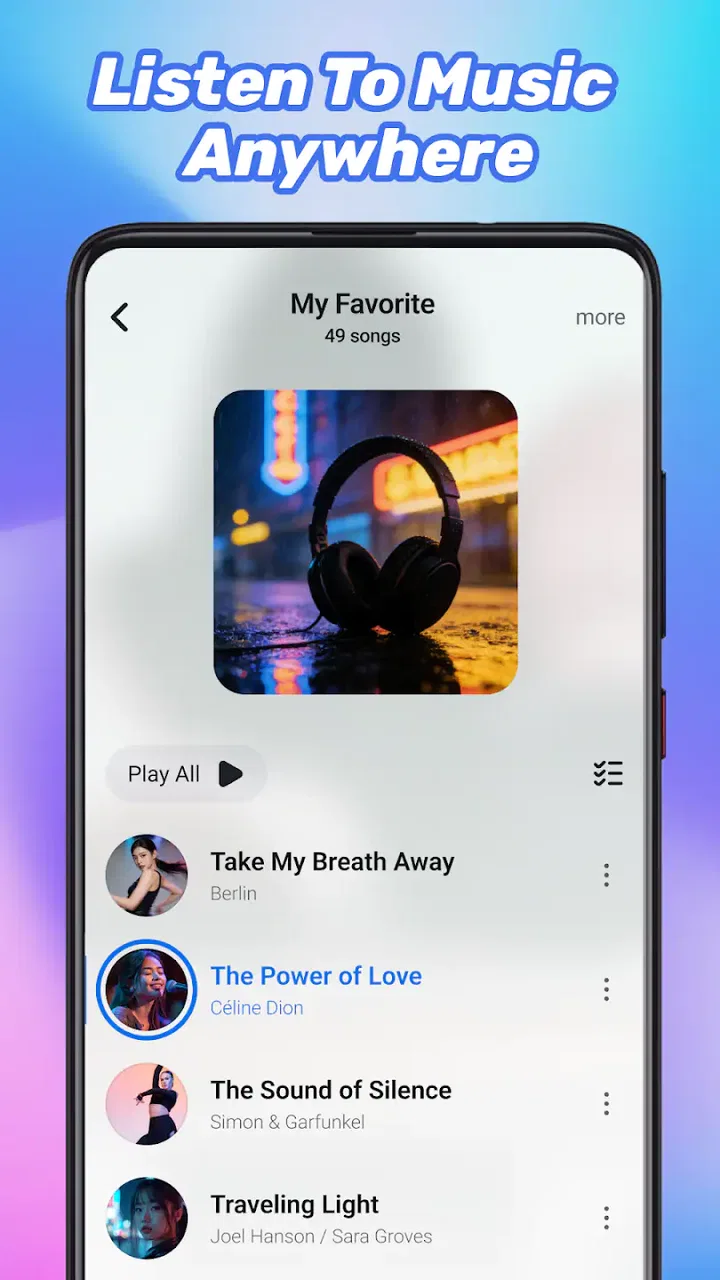
I approached Happy Tunes - Earn & Play as a small music-and-audio app for everyday listening, especially in situations where a phone is shared or passed around the home. Its simple store message suggests an easygoing experience, and that is the right expectation to bring to it: this is not an app I would choose for deep music management or professional audio work, but it can make sense when the goal is to keep music close without paying an upfront fee.
In my experience, the most useful question is not whether it can replace every music service. It cannot reasonably be judged by that standard without knowing what kind of listener you are. The better question is whether its straightforward idea fits your routine. If you want something light for casual listening, Happy Tunes has an approachable profile. If you need a carefully organized library, advanced playback controls, or a mature account system for several people, I would look at more established alternatives first.
How Happy Tunes fits into a shared household
A realistic use case is a household phone or tablet that moves between people during the day. One person may want music while preparing breakfast, another may use the device during a quiet afternoon, and someone else may pick it up for a short listening session later. A free music app can be convenient in that setting because nobody has to make a purchase decision before trying it.
You May Also Like

 AccuWeather: Weather Radar
AccuWeather Review: A Quick, Clear Forecast for Everyday Decisions
For everyday plans, the best forecast is the one you can understand quickly. AccuWeather makes rain timing, radar, and local conditions easy to act on, with a few trade-offs.

 Hill Climb Racing
Why Hill Climb Racing Still Turns Crashes Into One More Run
A tiny car, a bumpy hill and one more upgrade: Hill Climb Racing keeps resurfacing because its simple chaos makes every near-miss feel personal.

 AliExpress - Shopping App
AliExpress Makes Global Shopping Feel Personal, but Shoppers Bear the Risk
AliExpress turns a global marketplace into a pocket-sized discovery engine. Its reach is useful, its shopping loop compelling, and its trade-offs easy to miss.

 Lords Mobile: Kingdom Wars
Lords Mobile Is a Kingdom-Building Routine, Not a Quick Match
A case-by-case verdict on the building, battles, device demands, and social commitments that make Lords Mobile rewarding for some players and exhausting for others.

 PDF Scanner app - TapScanner
TapScanner Makes Paperwork Easier to Capture, Check, and Share
TapScanner makes scanning with a phone feel less like a rescue operation and more like a dependable step in getting work done. Its capture tools are useful, though not flawless.

 Block Blast!
 Shows How Much a Puzzle Game Can Leave Out
A quiet grid game shows why puzzle players increasingly value instant clarity, repeatable skill and low-pressure play—and where the genre still needs to catch up.
More From Our News Desk
View All News


That convenience has a boundary, though. A shared device is not the same as a shared personal account. I would treat Happy Tunes as a casual listening option rather than assuming that every listener has a separate space, separate history, or separate preferences. Unless an app clearly offers profiles or account separation, the safest habit is to keep expectations modest and avoid using one household installation as if it were a collection of private music accounts.
This matters more than it may seem. Music preferences can change the experience quickly. A child may want cheerful tracks, an adult may prefer background audio while working, and another person may simply want to test the app. When everyone uses the same installation, the household needs a simple agreement about who controls playback and when. That kind of coordination is not a missing technical feature; it is a practical way to prevent small disagreements.
I would begin by deciding where the app belongs. On a personal phone, it can be tested as an individual music tool. On a shared tablet, I would place it among the apps intended for common use and avoid treating it as a private media locker. That distinction helps users understand what to expect from the moment they open it.
Starting without turning setup into a household project
Happy Tunes is free, which lowers the barrier for a quick trial. I would install it on the device that will actually be used for listening rather than immediately placing it on every phone in the home. That small choice makes it easier to see whether the app earns a regular place in the household before creating unnecessary clutter across several devices.
The app comes from FortuneView Developer and is listed for Everyone, so its general presentation is intended to be accessible to a broad audience. Even so, an age label should not be confused with a personal recommendation for every child. Adults still need to decide whether the way the app works suits the child using the device and whether the child understands which controls are available.
My preferred setup is deliberately simple. I would install it, open it while an adult is present, check the main listening flow, and then decide who may use it. I would also make sure the device itself has the right screen-lock and purchase protections before handing it over. Those protections belong to the phone or tablet, not automatically to the music app, so it is better not to assume that a free download means every surrounding action is risk-free.
Another useful boundary is notification discipline. If the app produces alerts, I would review them before allowing regular use on a shared device. A notification that is harmless on a personal phone can be distracting when the device is used for schoolwork, bedtime routines, or family communication. I would not promise that Happy Tunes offers a special household mode; instead, I would manage the device as a shared object and keep the experience focused on listening.
The same approach applies to storage and attention. A casual music app should justify its place through actual use, not simply because it was easy to install. After a few listening sessions, I would ask whether people return to it naturally or keep switching back to another service. That is a more useful test than judging it after a single opening screen.
Coordinating playback when several people use one device
The main household friction is likely to be control rather than installation. When two people share one device, the person holding it usually has practical control over what plays. I would establish a basic rule: the current listener chooses the music, while others can suggest tracks without repeatedly taking over the device. That sounds obvious, but it prevents the app from becoming a source of unnecessary interruptions.
A second rule is to stop playback before handing the device to someone else. This avoids the awkward moment when audio continues unexpectedly in another room or interrupts a call. It also gives the next user a clean starting point instead of making them guess what the previous listener left active.
For a family routine, I would use Happy Tunes in defined moments rather than leaving it running indefinitely. For example, it could be used during a short cooking session, a tidy-up period, or a relaxed break. Defining the listening window makes the app easier to share and keeps it from competing with every other use of the device.
There is also a useful distinction between background music and active listening. Background use favors quick access and low effort. Active listening demands better control over what comes next, how the library is organized, and how easily a person can return to a favorite selection. Happy Tunes is more appealing for the first situation than the second. If your household wants carefully planned playlists for different people, a full music service with established library tools may be the better fit.
I would also avoid promising a child that the app will behave like a personal music account unless I had tested that exact behavior. Shared use works best when everyone knows that preferences and playback may overlap. The app can be part of a common device routine, but it should not be presented as a private space by default.
Age, trust, and sensible supervision
The Everyone content rating makes Happy Tunes approachable for general audiences, but trust still comes from how the app is used, not from the label alone. For younger listeners, I would introduce it together with an adult and explain the basic limits of the device: what can be opened, what should remain untouched, and when the device must be returned.
I would be particularly careful with the phrase “earn and play” in the app’s name. It may sound attractive to a child, but I would not explain it as a promise of guaranteed rewards or personal income. The safer interpretation is to judge the actual experience on the device and avoid making financial claims that the app itself does not establish. Children should understand that entertainment is the main reason to use it, not a dependable way to earn something.
For older children and teenagers, the conversation changes slightly. They may be able to manage music independently, but shared-device boundaries still matter. I would ask them to keep the volume considerate, avoid changing another person’s listening setup without permission, and tell an adult if anything in the app seems confusing. Those are ordinary digital habits, yet they are especially useful when several people rely on one installation.
Adults should also be honest about the difference between a simple app and a controlled family platform. I would not assume that Happy Tunes includes separate child profiles, detailed parental controls, or household reporting. If those tools are essential to your decision, choose an alternative that explicitly provides them. Happy Tunes can be suitable for supervised casual use without being the right choice for a family that needs formal account boundaries.
Privacy expectations deserve the same careful treatment. I would avoid entering unnecessary personal details during any setup process and would not create a shared account using information that belongs to one family member if the device is meant for everyone. The practical rule is easy: use the minimum information needed for the experience and keep personal accounts on personal devices whenever possible.
What the app does well for casual listeners
The strongest part of Happy Tunes is its low-commitment character. It is free, and its purpose is immediately understandable: put music within reach and see whether it suits your routine. That makes it attractive for someone who wants to experiment without first choosing a subscription or building a carefully organized collection.
I can also see value for a secondary device. An older phone or household tablet that is used mainly for simple entertainment may not need a large, complicated music platform. A lighter app can be easier for occasional listening, particularly when the user does not want to manage a long list of services.
The current version is 1.0.1, and the app supports Android 7.0 or later. In practical terms, that gives it a broad compatibility range for devices that are still in regular household use. I would still test it on the actual shared device rather than assuming that compatibility alone guarantees a smooth experience, because older hardware can respond differently from newer phones.
Its public reception is encouraging without being overwhelming: Happy Tunes has a 4.3 average from around seven hundred ratings, with over one hundred thousand installs. I read that as a sign that the basic concept works for a meaningful group of users, not as proof that it will satisfy every listening style. A rating can tell me that people generally accept the experience; it cannot decide whether the app has the exact controls my household needs.
One non-obvious advantage of a modest app is that it can reduce decision fatigue. In a shared home, people often do not want to compare several services before playing something. If Happy Tunes gets a listener to music quickly enough, that simplicity may matter more than a long feature list. The trade-off is that simplicity becomes a weakness once the household wants detailed organization.
Where I would choose another music option
I would skip Happy Tunes if your main requirement is a polished, long-term music library. Listeners who carefully sort albums, maintain personal playlists, move between several devices, or expect sophisticated recommendations are usually better served by a larger, established music platform. Those services are designed around persistent personal listening rather than a lightweight shared-device experiment.
I would also hesitate if several household members need independent histories and preferences. Without clearly established profile separation, one installation can become confusing. A personal service with individual accounts is more appropriate when each listener wants control over their own collection and recommendations.
People who need formal parental supervision should be equally cautious. Happy Tunes may be usable in a supervised setting, but that is different from offering a complete family-management system. If your decision depends on age-specific profiles, activity visibility, or strict content controls, select an app that places those functions at the center of its design.
Another trade-off concerns the word “play” in the title. If you are looking for a full game, a structured reward system, or a clearly explained earning program, I would not install it based on the name alone. I would first inspect the actual screens and terms presented during use. For me, the app makes more sense as a music-and-audio download with an inviting title than as a replacement for a dedicated game or financial app.
Finally, I would not make it the only option for a household that depends on music for important routines. If music is needed for classes, professional work, events, or carefully timed activities, reliability and control deserve priority. Happy Tunes is easier to recommend for flexible, everyday listening than for situations where a missing control or unexpected interruption would cause a real problem.
Practical ways to test it fairly
My first test would be short and purposeful. I would choose one shared device, install the app, and ask each intended listener to try it during a normal part of the day. I would pay attention to how quickly each person understands the interface, whether handing the device between users feels natural, and whether the listening flow remains comfortable after the novelty wears off.
Next, I would test a handoff. Start music, lock or put down the device, then let another person take over. The point is not to invent a technical benchmark; it is to discover whether the household can use the app without confusion. If people repeatedly ask where the previous listener stopped or how to get back to a preferred selection, that is useful evidence that a more organized service would suit them better.
I would then try the app in three different contexts: quiet background listening, a short focused session, and a shared family moment. This exposes the difference between an app that is pleasant for ten minutes and one that fits a real routine. I would also check whether the device remains available for ordinary tasks such as messages, calls, or schoolwork, because a shared tablet has to serve more than one purpose.
A helpful household tip is to keep the trial device-specific. Do not make several family members change their usual music apps until Happy Tunes has proven useful. That way, the experiment has a clear cost and an easy exit. If it works, keep it for the people who enjoy it. If it does not, uninstalling it will not disrupt everyone’s established listening habits.
I would also discuss expectations before children use it independently. Explain that the app is free, that listening is the main purpose, and that no one should assume rewards or earnings without understanding exactly what is shown. This conversation prevents the app’s name from creating unrealistic expectations and gives adults a chance to observe whether the experience is appropriate for the child.
My household verdict
Happy Tunes is worth trying when you want a free, accessible music-and-audio app for casual listening on a personal or shared Android device. I like its low-pressure entry point and its suitability as a secondary option for a household that does not need a complex music ecosystem. FortuneView Developer has positioned it in a way that feels approachable, and the broad Everyone rating supports that general accessibility.
My recommendation comes with clear conditions. I would use it as a common listening tool, not as a substitute for separate family accounts. I would supervise younger users, keep expectations around “earn” realistic, and establish simple rules for playback and device handoffs. Those steps make the experience more predictable without pretending that the app provides household controls that have not been established.
The public response gives it a reasonable starting point, and the current release is recent enough that I would keep an eye on how it fits my device over time. Still, I would judge it by repeated everyday use rather than its rating or install count. The real test is whether people can open it, find an enjoyable listening session, and pass the device along without arguments or confusion.
For a family seeking a structured music service with private profiles, detailed organization, or strong parental management, I would choose a different option. For a household that simply wants an uncomplicated way to bring music into shared moments, Happy Tunes - Earn & Play is a sensible app to test. Its best quality is its low commitment; its main limitation is that casual simplicity may not be enough once your household expects personal spaces and advanced control.
FAQs for Happy Tunes - Earn & Play
01What is Happy Tunes - Earn & Play?
Happy Tunes - Earn & Play is a rewards-focused mobile app that combines casual entertainment with opportunities to collect points or other in-app rewards. Users typically earn by engaging with available activities, such as playing games, completing tasks, or interacting with offers. Before downloading, check the current app description carefully because the available activities, reward system, and eligibility rules may vary by country or change through updates.
02How do you earn rewards in Happy Tunes - Earn & Play?
The app generally allows users to earn rewards by completing the activities displayed on their account, which may include playing selected games, reaching milestones, answering questions, or completing promotional tasks. Each activity should show its requirements and potential reward before you begin. Read those conditions closely, since some offers may require a specific installation method, time limit, or minimum level of progress.
03Can rewards from Happy Tunes - Earn & Play be converted into real money?
Happy Tunes - Earn & Play may provide redemption options such as gift cards, vouchers, or other supported rewards, but the exact choices depend on your location and the app’s current policies. Reaching the minimum withdrawal threshold may also be necessary. Rewards should not be considered guaranteed income, and users should confirm the redemption terms, processing times, expiration rules, and any restrictions before investing significant time.
04Is Happy Tunes - Earn & Play free to download and use?
The app may be free to download, but that does not always mean every part of the experience is completely free of conditions. It can include advertising, sponsored offers, optional purchases, or activities provided by external partners. Review the permissions requested during installation and avoid spending money solely to obtain rewards unless the terms are clear and the potential benefit is worth the cost.
05Is Happy Tunes - Earn & Play safe to use?
As with any rewards application, safety depends on downloading it from an official Android or iOS store and reviewing its privacy policy, permissions, and developer information. Avoid unofficial APK files or websites promising faster payouts. Do not provide unnecessary sensitive information, and be cautious with third-party offers that request payment details. If an activity appears misleading or asks for excessive access, skip it.
Pros
- Simple interface makes games and rewards easy to navigate.
- Offers short activities suitable for quick breaks.
- Progress and reward tracking are clearly presented.
- May provide extra entertainment beyond its earning features.
- Free to install
- with no upfront purchase required.
Cons
- Reward availability may vary by country or region.
- Some activities can become repetitive after extended use.
- Cash-out requirements may take time to reach.
- Personal data may be required for account and payment verification.
- Earnings are likely modest compared with the time invested.

Happy Tunes - Earn & Play
Gallery